How Supportive Trainers Help You Exercise Safely with Back or Joint Discomfort
A cautious, practical guide for people in Delhi explaining how attentive trainers can adapt workouts, supervise form, and recommend safer machine and exercise options — illustrated with how Sharks Gym trainers support members with mild back or joint issues.
Why trainer support matters for back and joint comfort
When you have mild back or joint discomfort, small changes in technique, load, or exercise choice can make a big difference between productive workouts and flare-ups. Trainers offer real‑time observation, exercise selection, and progression plans that reduce unnecessary strain while helping you maintain fitness. Rather than replacing medical advice, an attentive trainer complements it by translating recommendations into safe, gym‑appropriate routines and by watching for early signs of trouble during sessions.
Initial assessment and clear communication
A helpful trainer begins with a brief assessment: asking about pain patterns, recent injuries, and any medical guidance you’ve been given. Communicating what feels comfortable and what provokes pain lets the trainer tailor exercises. Reviews of Sharks Gym repeatedly note trainers who listen and adapt — members specifically mention trainers by name for improving issues like lower back discomfort — which reflects the kind of individualized approach that matters for safety.
How trainers modify exercises to reduce strain
Modifications take many forms: reducing range of motion, lowering weight, changing tempo, or choosing a comparable but lower‑stress movement. For example, a trainer may replace heavy barbell deadlifts with lighter trap‑bar lifts, use cable or machine variations that guide the path of motion, or switch from deep squats to box squats to limit joint stress. Trainers also use regression and progression — starting with simpler, controlled patterns and only increasing complexity when form and tolerance allow.
Form correction and supervised practice
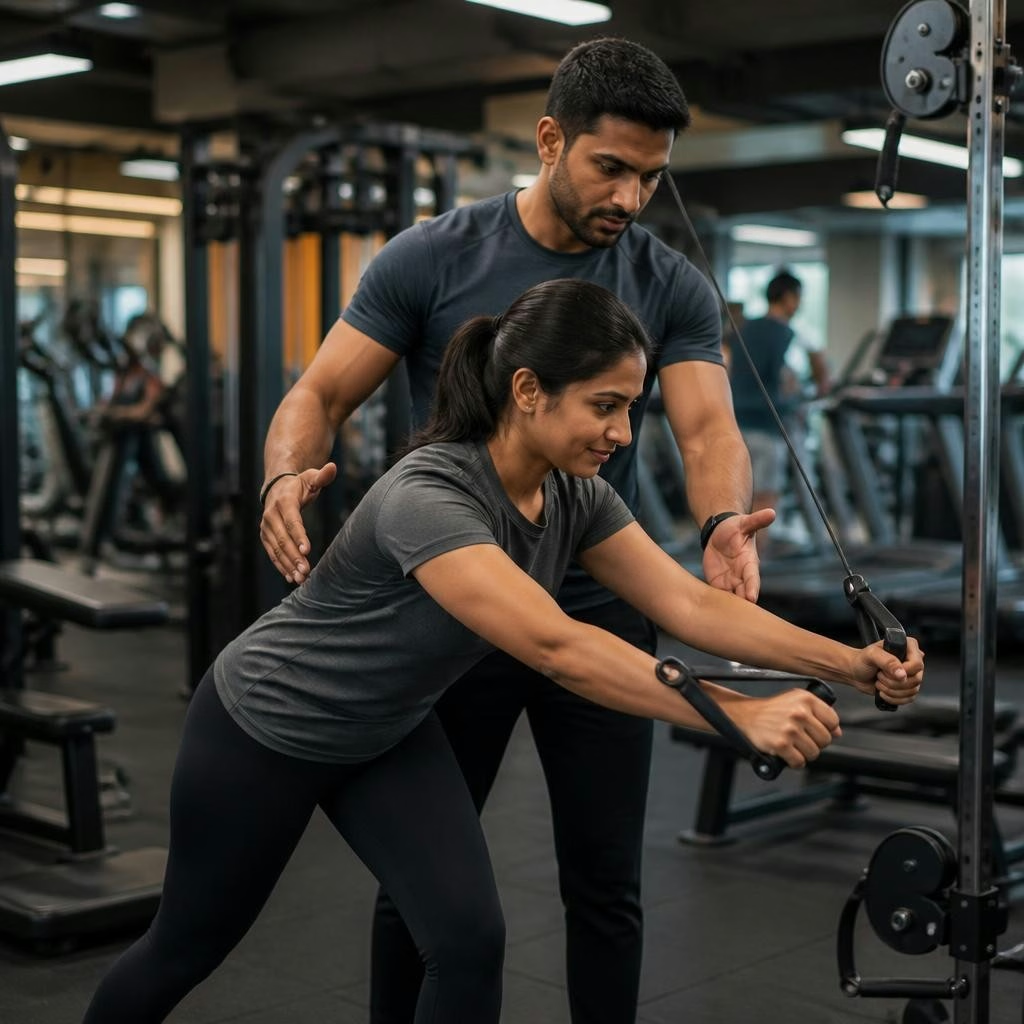
Consistent, precise form is one of the best protections against aggravating back or joint symptoms. Trainers at well‑equipped gyms observe posture, breathing, and alignment, offering cues and hands‑on adjustments when appropriate. Several Sharks Gym members praise trainers for correcting posture and explaining the correct posture of exercises; this kind of attentive coaching helps reinforce movement habits that protect vulnerable areas over time.
Choosing safer cardio and strength options
Low‑impact cardio such as cycling, rowing, or using an elliptical can maintain conditioning while reducing impact on joints. For strength work, machines that provide external stability (leg press, seated row, chest press) can be safer initial options because they limit compensatory motions. Trainers can also plan unilateral work and control tempo to address muscle imbalances that often contribute to joint stress. Sharks Gym’s range of modern equipment and multi‑floor layout gives trainers options to match exercises to individual needs.
Progression, recovery, and complementary support
A careful program balances workload with recovery: planned rest, gradual load increases, and mobility or flexibility work to support joint health. Trainers often integrate warm‑ups that target the specific joints and muscles you’ll use that day and introduce mobility drills to improve control. When available, combining personal training with nutrition guidance — a service listed for Sharks Gym — helps support tissue repair and overall resilience, though trainers will advise you to follow any medical guidance first.
Practical tips for Delhi members considering Sharks Gym
If you’re in central Delhi and managing mild back or joint discomfort, look for trainers who ask about your history, offer exercise alternatives, and monitor form closely. At Sharks Gym (near Panchkuian Road and RK Ashram Marg), reviewers highlight approachable and professional trainers who help members modify routines and reduce pain. Before starting, tell staff about any recent diagnoses, start with a supervised session or personal training package, and agree on clear signals to stop or change an exercise if discomfort rises. If pain is persistent, severe, or accompanied by numbness or weakness, seek medical evaluation before continuing an exercise program.
Article by
Sharks Gym
A modern and well equipped gym with Best biomechanics Equpiments facilitated with physical trainers. Hygienic environment with focus on overall fitness and health.